
This is the sixth and final in a series of posts about each of the teams that will be attending SCI 2017, and their projects. This one was submitted by Anneli Sundin.
The context
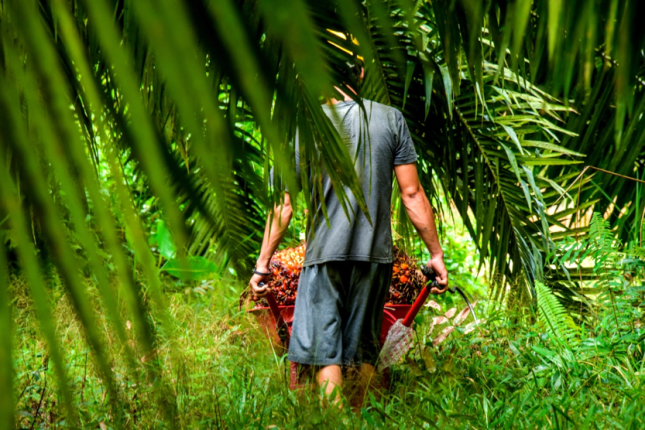
For SCI2017, our team comes together to develop empowering narratives around the issue of sustainable food and the soulful, life-giving properties that food could represent. Food is essential for every human being and bound up with culture and relationships. Food engages people and can evoke strong emotions, memories and creativity, and is closely related to well-being and lifestyle. Yet in the Western world and in rapidly developing regions, food has become merely a habit, often an unhealthy one, and consciousness and caring has been lost. Many people rarely make a connection with our environment and the enabling conditions it provides for food production. People rarely think of where the food comes from, its quality, the resources involved and complex structures in place to produce different types of food. The awareness of the impact that food production can have on farmers and their livelihoods is generally low. Furthermore, people in parts of the world that are becoming more affluent are increasingly adopting a diet which entails a high intake of animal-based products and processed food while eating less plant-based food such as vegetables, pulses and grains, which are often more resource efficient and where production is associated with lower emissions. At the same time as we deforest new tracts of land for cash crop production, much of the food is wasted, with huge implications for soil loss, climate change, and household economies (Garnett, 2016).
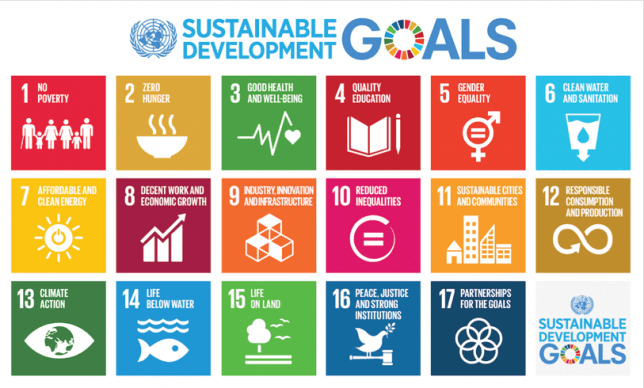
In short, our global food system is riddled with paradoxes that directly relate to the challenges of the recently established Sustainable Development Goals (SDGs). In some parts of the world and social groups, there are crises of obesity and non-communicable diseases related to overconsumption, and in others the crisis is one of famine and malnutrition (SDG #2). Whilst this is linked to lifestyle and distribution of wealth, there are huge inequalities related to food consumption (#10). We produce enough calories to feed everyone in a sustainable way, but our dietary choices are leading our planet to degrade alarmingly, undermining our ability to meet the food needs of the future (#6, #14, #15, #12). Moreover, there is a chronic shortage of research on the consequences of the chemicals used to grow and preserve our food (#2), even whilst people spend hours on social media hungry for information on the latest health food trends. Actors enter the global food system with vastly different positions of power, and the consequences of that imbalance for labour, livelihoods and the planet are difficult to make visible in the choices we make at the supermarket (#1, #10, #8). These paradoxes are caused by a complex system, in which actors are increasingly disconnected from the food all the way from the farm to the fork.
We need to transform the way we communicate science
In this era of ever growing specialisation and information-overload, the role of the science communicator has never been more important. Not only is there a challenge in making sense of research for the general public, there is also increasingly a need to focus on translating the science between specialised disciplines to help interdisciplinary collaborations succeed. Furthermore, in the area of agriculture and food sustainability there is also a considerable challenge in the disconnect between actors, in terms of perspectives, motivations and even worldviews. Communicating complex science, portraying the different perspectives and finding the stories that can help build common ground is of critical importance if we are to move forward creating a more sustainable food future. It is difficult to bring these three elements together in one coherent, balanced and engaging narrative. We therefore need to try new tools that can create connections while breaking through the information-noise and the siloed thinking we easily turn to when we are confronted with complex issues. We believe storytelling could be an important tool in our toolbox when working to create a deeper understanding among the public.
In parallel, conspiracy theories and narrow-minded group thinking are prevalent in society today. We live in a time where disinformation and so called ‘alternative facts’ is a rising problem. The truth can easily be distorted using narratives describing cause and effect. We know that predisposed opinions can go viral if communicated powerfully and are told by master storytellers. Hence, on one hand, academia and science communicators need to construct engaging stories for their target audiences. On the other hand, they need to ensure that scrutinised evidence back up these stories and avoid crossing the boundary where the story becomes an act of persuasion. We know so much that people are more likely to listen to facts and statistics if these are embedded in a good story (Duarte 2010). For people to make sustainable and healthy choices based on science-informed knowledge, academia need to become better at telling the science through stories.
Storytelling to promote sustainable change
Are the effects of the food system so massive and disconnected that they cannot be addressed by any one group of people? What power do actors, including the citizens, have to alter a system whose side-effects of contamination, pollution, undernourishment, and obesity appear as a price needed to be paid? Where do people, and their desire for healthy food and a liveable planet, find the space for change?
We want to be able to, easily and effectively, use storytelling to engage and (re)connect actors in the food system to the rural and natural environments supporting food production. Humans have been using narratives since ancient times. Today storytelling is used in many different contexts in society, and also more commonly used within the science and humanities as a qualified tool for communicating research (Dahlstrom 2014).
The team wishes to explore how storytelling can be a useful method to get consumers more aware of where and how food is being produced, at what environmental and social costs it is being produced, distributed and wasted and how best to convey the complexity, the way issues are interlinked, as well as the ways forward for in global food system sustainability. People’s understanding of scientific data and complex problems can be significantly enhanced if told through a narrative. Therefore, we think it is down to the storytellers and science communicators to digest the complexity in the food system in a way that enables the public to build an increased awareness and sense of connection. Engaging this group can help raise the issue of sustainable healthy diets and hopefully make other actors understand the leverage they have, as consumers, food industry or civil society representatives and as policy-makers, to make a change for a food system that better works for people and the planet.
The Team Members
For SCI2017, we aim to bring together a team with a diverse set of experiences and motivations to achieve positive change against the backdrop of the SDGs through our professions, interests and practices. The team comes from different cities in Europe, mainly Sweden (Stockholm, Gothenburg, Malmö) and Spain (Barcelona), where most of us are active in the sustainable food movement and healthy living. This will provide an opportunity for sharing experiences and learning from using storytelling in science, digital media and social media tools.
Ragnhild Larsson – the storyteller who loves thinking outside the box
Ragnhild is an independent journalist and storyteller specialized in science communication.
After more than 25 years experience of writing articles for Swedish papers and magazines, about working life and environmental issues she is now focusing on how to communicate science using storytelling. Her aim is to help scientists to cut through the noise and create impact with their research using different types of storytelling.
So far she has produced several digital science stories and short films on behalf of the Swedish Foundation for Strategic Research, The Hasselblad Foundation, Chalmers University of Technology, University of Gothenburg etc. Ragnhild also facilitates workshops where the participants produce their own digital stories using a method developed by Joe Lambert at Storycenter in Berkeley California. Among the customers are Wallenberg Academy Fellows and researchers at Royal Institute of Technology.
Recently she wrote a chapter about her experiences communicating science using digital storytelling in the book, Digital Storytelling in Higher Education, International Perspectives, that will be launched at Palgrave Macmillian in May 2017.
Becoming more and more concerned about climate change, she decided to launch a podcast about climate change in September 2015, “Klimatpodden”, where she interviews researchers, activists and entrepreneurs who engage to create a more sustainable world in different ways.
It is obvious that food production and what we eat affects the climate to a large extent. Therefore, it would be a great opportunity to explore how to use storytelling, together with this competent team from different disciplines at the Triangle Scholarly Communication Institute, with the aim to make people more aware of these issues and in the end to create more sustainable eating habits and food production.
Anneli Sundin – the science communicator and food lover who’s aiming to create sustainable change
Anneli joined the Stockholm Environment Institute in 2014, and is now working dynamically with science communication and stakeholder engagement. On the side, she is also coordinating activities by the newly established network of science communication in Sweden: Forskom (together with team member Ragnhild!). Anneli has a background in environmental science and sustainability, and have a broad understanding of concepts linked to resilience. In her studies and work, she has had opportunities to explore and understand climate change impacts on smallholder farmers in Eastern and Western parts of Africa.
Not only does she have a passion for reducing poverty and inequalities, and promote a sustainable food system, but also in how to effectively communicate research in fun, creative ways that results in long-lasting impacts. In terms of storytelling Anneli recently submitted a scientific paper on the benefits of including storytelling in research for increased stakeholder engagement, but she is eager to expand her skillset and learn as much as possible on the topic.
At the Triangle Scholarly Communication Institute, she hopes to gain a lot of hands-on tips and insights around how storytelling can be used as a communications tool. In return she anticipates that the team and herself will be able to contribute with nuanced perceptions of society’s often complex sustainability challenges.
Marie Persson – Knowledge broker working to create interdisciplinary dialogue and action on sustainable food systems
Marie is the Communications and network development officer at the Oxford University based Food Climate Research Network (FCRN). The FCRN focuses on science communications for interdisciplinary dialogue, knowledge exchange and collective action. She has five years of experience working with communications and knowledge exchange as well as research uptake on sustainable food, and she is becoming more and more eager to find new ways of creating engagement around and action on both Agenda 2030 and the Paris climate agreement. She works to facilitate interdisciplinary exchange between the very wide group of stakeholders involved in the food sustainability debate by, for example, connecting farmers with soil scientists, economists and aid workers in forum discussions to share experiences and create common ground. She is curious about exploring approaches used by other disciplines (e.g. arts, design, gastronomy) as well as new forms of communications (e.g. storytelling) to create understanding, engagement and a stronger connection to the food on our plate. She hopes that SCI2017 at Triangle Scholarly Communication Institute will provide discussions, tools and insights that can help her and the team create impactful communications that show the real value and importance of sustainable food to ensure human and planetary wellbeing.
Diego Galafassi – A PhD candidate and artist based in Stockholm.
Mobilising areas of film, performance, installation, participatory action research, anthropology, whole system approaches, Diego is looking at how transformative knowledge can be nurtured in the context of climate change and poverty alleviation.
In coastal Kenya and northern Mozambique, Diego has been researching the role of stories and narratives in processes of transformative learning. In the Iberian Peninsula, through EU-project Impressions Diego is exploring how artistic practices, like theatre, film, and immersive environments, may contribute to the development of shared visions and support the development of integrated solutions in the context of high-end climate change.
Watch a short film from his work in Impressions: https://vimeo.com/219431632
What excites him the most in terms of food, is that it has a direct connection to Earth. Everyday more than once we sit and eat Earth, it makes us and we make it. He looks forward to interacting with his team members and the rest of the institute, and exploring storytelling as a means to reach change in food sustainability.
Jackie Turner – the former media producer who now researches food security
Jackie had her first food sustainability “eureka” moment while living on a corporate banana plantation near the Panamanian-Costa Rican border during her undergraduate thesis at the University of Michigan. She realized that many people have no idea that bananas “do not grow on trees,” literally and metaphorically, nor that the process for producing them is destructive to both human health and the environment.
After completing a Bachelors of Art in each Environmental Studies and Film Studies, she moved to Los Angeles, hoping to tell stories about sustainability in documentary films and television. After years of producing short films and editing for reality television, the harsh truth of that corporate banana-growing system still echoed. She began (and recently finished) a Masters of Science at Imperial College London, focusing her research on Ethiopia’s “false banana,” a reported climate-resilient crop, and its potential to provide nutrition to millions of Ethiopia’s low-income rural population.
Based on her experience in the media industry, Jackie remains convinced that narratives are the best way to connect people with ideas, and she believes that finding ways to tell stories about food security, food sustainability, and food sovereignty are crucial to the ongoing larger narrative of how we will continue to feed the world in the years to come. She will be returning to Costa Rica in 2018 to film a full-length feature documentary about alternative and sustainable forms of banana production. She is excited to be part of the team and learn from the Triangle Scholary Communication Institute about the role storytelling can take in science communication.
Josefin Vargö – Experience Designer who uses food as a tool for interaction
As a Curator, Experience and Food Designer Josefin designs time, the connection and experience between people. By framing and constructing forms of interaction with our different senses, she design new ways of experiencing a situation and matter.
She develops interdisciplinary sociocultural projects and her work plays with the interaction of our different senses. Food is often used as a material and meals as the designed experience, because it has the ability to reflect and express our attitudes about society in terms of time, money, social movements and resources and has the ability to naturally initiate social behaviour. Regardless of what is served, the act and importance of eating is something we all share and have common, triggering conversation and connections between people.
In her project ’The Living Archive’ she has collected peoples sourdough starters, the story behind them and asked people to describe its value. ”What she is designing is precisely the nature in which knowledge and emotions are exchanged between people. Contained in the sourdough culture are the essential knowledge and ideas for our desire to live; our relationship to food, the global food crisis, the environment, our health. She leads us to consider diverse ways of being.” — Curator Noriko Kawakami & Ikko Yokoyama
Underverk is a Stockholm based experience design platform she co-founded in 2013 together with journalist Jonna Dagliden. They felt it was important to show design beyond the object, to present projects in which design facilitates new interactions. They noticed the shift from a more industrial and product based design to the more critical, social oriented and experience based design was underrepresented in Sweden and decided to fill that gap.
Together with meal ecologist Ayhan Aydin, Josefin runs Aydin & Vargö. A Stockholm-based gastronomic design studio. We creates sensorial meal experiences and installations based on a holistic food system.
In November 2017 she is attending a collaborative artist residency at Flux Factory, New York together with artists and curators Louise Hobson, Sam Perry and Will Owen. Together they will examine artistic strategies within food politics, societal culture and commute.
Their focus will be the diverse culinary culture of the 7‐train, which is known for being one of the most international train rides in the world. The 7‐train runs between Flushing Main Street (Queens) and 34th street (Manhattan), travelling through neighbourhoods of communities from Spain, Italy, Mexico, India, Ireland, Romania, Thailand, Nigeria, China, Turkey. It’s a World tour. By investigating the diverse culinary cultures, they will use ‘food’ as a tool for debate and reflection on politics, economy, history, and ethics related to migration, multiculturalism and interculturalism.
Outreach and follow-up
We have many exciting plans for how we can reach out about the conference.
First of all, be sure to follow us on social media! There, we will share key messages, great tips, photos and videos emerging from the forum.
We will write blog articles that will be posted on our organizations’ websites, such as weADAPT.org, fcrn.org.uk, sei-international.org, SIANI.se and Forskom.org. Our aim is to reach out in public media too and narratively summarise our key messages in an op-ed for both Swedish and UK press, such as in one of Sweden’s largest daily newspaper Dagens Nyheter and The Guardian in the UK. We will also write for the Swedish web magazine Curie devoted to the world of research (established by the Swedish Research Council) and aim to publish a post in The Conversation which is an independent source of news and views, sourced from the academic and research community and delivered direct to the public. We will gather inspiration and reflections for producing one or more episodes of the Swedish podcast Klimatpodden, linked to the topic of global food systems sustainability.
Due to our expertise and interest in digital visual stories, we plan to use the Exposure tool or similar with which you can tell beautiful and engaging stories with your photos. We will bring our cameras to SCI2017 and make sure to bring back lots of interesting photos and videos from the event! These we will use and blend with a variety of food systems related photos to connect to our topic.
After the forum, as an important capacity building activity, we are also planning to facilitate a workshop in digital storytelling where the participants, from our networks back at home, create their own stories on the topic of food system sustainability. The stories could be produced by both researchers, food producers and food consumers. The workshop will work as a platform for us to be able to share what we have learnt at SCI2017 and for the participants to better understand how storytelling can help them in their daily work aiming for sustainability in our common food system.
References
Dahlstrom MJ. (2014). Using narratives and storytelling to communicate science with non-expert audiences. PNAS, 111 Suppl 4:13614-20. http://www.pnas.org/content/111/Supplement_4/13614.abstract
Duarte N. 2010. Resonate – Present Visual Stories that Transform Audiences. Hoboken, N.J.: Wiley.
Garnett T. 2016. Plating up solutions, Science, 353 (6305), pp. 1202-1204.
[ Edited on 6 September to reflect a change in two of the team members. ]
[ Oil palm image by CIFOR used under CC BY-NC-ND license. Sustainable Development Goals image from the United Nations, used under terms defined in the UN web site.]

 trianglesci.org