HuMetrics: Building Humane Metrics for the Humanities

This is the second in a series of posts about each of the teams that will be attending SCI 2016, and their projects. This one was submitted by Nicky Agate.

Stained glass window spiral

What are the goals of your project and how do they fit the theme of this year’s Institute?

As Martin Paul Eve writes of current metrics systems in “Metrics in the Arts and Humanities,” “They are a quantification of a symbolic capital that maps onto material capital.” We approach this year’s Institute with the goal of finding a way to measure a humane metrics, that is, in a way to expose a broader sense of value or worth that goes beyond quantitative measures that speak only to the market. We want to answer a number of questions that have left scholars serious about the promise of impact metrics for the humanities unsatisfied:

  • If we start from the premise that citation metrics are insufficient to understand academic impact in the humanities and that, at the same time, more extensive alternative metrics that measure the popularity, trendiness, or authorial stamp of a given piece of scholarship cannot alone indicate quality, where does that leave us?
  • What of the obscure scholarship that uncovers major new territory within its field when that field is extremely small?
  • How can we ensure that it is not only the importance of the loudly public that is measured?
  • How are we to make claims for the value of non-traditional scholarly communication in the humanities? How do we gather metrics that value the entire lifecycle of scholarly production rather than just the end results?
  • If existing altmetrics can only measure the impact of something published online — and if they require a Digital Object Identifier or other persistent identifier(s) — what alternatives might we envision?
  • How can we incentivize openness and public availability so that scholars working outside the framework of traditional scholarly publishing are rewarded for their contributions to advancing knowledge in their discipline?

Illustration of statistics and people

Who is on your team, and what are you hoping they will contribute to the project?

Our team offers extensive experience representing a broad array of stakeholders: scholarly societies, altmetrics organizations, university administration, open access repositories, funding agencies, and academic libraries. We believe it is essential to bring these people together to discuss not only how we should measure scholarly impact (and what we should be measuring), but how we can assure such metrics play a role in tenure and promotion cases, grantmaking, and library assessment in a systematic rather than an ad-hoc way.

Nicky Agate is project manager for digital initiatives at the Modern Language Association, where she manages MLA Commons, the CORE repository, and Humanities Commons.

Rebecca Kennison is a principal at the non-profit organization K|N Consultants and co-founder of the Open Access Network (OAN).

Stacy Konkiel is the Outreach and Engagement Manager at Altmetric, a data science company that uncovers the attention that research receives online.

Christopher Long is the dean of the College of Arts & Letters at Michigan State University.

Jason Rhody recently joined the Social Science Research Council (SSRC) as director of the Digital Culture program, which focuses on scholarly communication, digital methods, and transparency in social science research.

Simone Sacchi is the Research and Scholarship Initiatives Manager at the Center of Digital Research and Scholarship at Columbia University.

What do you look forward to most from SCI, and what do you hope to accomplish through the Institute?

We look forward to engaging in rich conversation about how we might develop more humane ways of documenting the impact and quality of humanities scholarship.

Ideally, our work will form the basis of an inclusive and open system that allows for evolving conceptions of scholarly communication and academic impact, one that can help funding agencies, research administrators, and individual researchers better understand the depth and breadth of the impact of humanities scholarship in public and private sectors alike.

Jumble of numbers

Building a Sustainable Digital Edition Ecosystem

This is the first in a series of posts about each of the teams that will be attending SCI 2016, and their projects. This one was submitted by R. Darrell Meadows.

Frederick Douglass portrait

Longstanding documentary editions like the Frederick Douglass Papers are beginning to find important pathways toward building a sustainable digital edition ecosystem. The NHPRC is proud to support the editing and publication of all of Douglass’s writings. To learn more, visit the Frederick Douglass Papers Edition at http://www.iupui.edu/~douglass/.

What are the goals of your working group and how do they fit the theme of this year’s Institute?

This TriangleSCI 2016 workgroup will explore the array of challenges and opportunities facing the digital edition. Over several days of intensive discussion, the group will identify immediate next steps and potential collaborations that can help to build a sustainable digital edition publishing ecosystem—one in which more and more projects are working in similar ways (leading to greater interoperability), in which a wider range of actors and institutions are participating (sharing skills, costs, and a shared commitment to the work), and in which the products of these efforts are discoverable, intelligible, usable, and freely accessible to researchers and the broader American public (in ways that will facilitate new research and learning at all levels).

By providing a forum for documentary editors, historians, archivists, publishers, and other digital humanities professionals to collaborate and discover together viable solutions and pathways toward a sustainable, open-access publishing ecosystem for digital editions, the working group also seeks to ensure that efforts are rooted in the practical realities of project design, work plans, management, costs, and related challenges facing all of these stakeholders. Our working group addresses, for an important sub-field within the scholarly communication ecosystem, the need for “scholars, universities, and funders” and others “to help re-align the incentives and economics” that currently guide the production of scholarly digital editions.

Who is on your team, and what are you hoping they will contribute to the project?

Participants in our working group are historians, digital humanists, editors, archivists, technologists, and university press/library publishers. As such, they represent some of the key professional groups whose knowledge, expertise and perspective have much to contribute to these discussions, and the new insights for building a sustainable future for the digital edition that we expect to emerge from them. Participants are:

  • Tenisha Hart Armstrong, Associate Editor and Associate Director, Papers of Martin Luther King, Jr., Stanford University
  • Hugh Cayless, Digital Humanities Senior Programmer, Duke University Libraries
  • Julia Flanders, Director, Digital Scholarship Group, Northeastern University Library
  • Ondine Le Blanc, Director of Publications, Massachusetts Historical Society
  • Darrell Meadows (organizer). Director for Publishing, National Historical Publications and Records Commission
  • Daniel Powell, Marie Skłodowska-Curie Fellow with the Digital Scholarly Editions Initial Training Network (DiXiT ITN)
  • Joshua Sternfeld, Independent scholar and Senior Program Officer, National Endowment for the Humanities, Division of Preservation and Access
  • Rebecca Welzenbach, Director of Strategic Integration and Partnerships, University of Michigan Press/Michigan Publishing
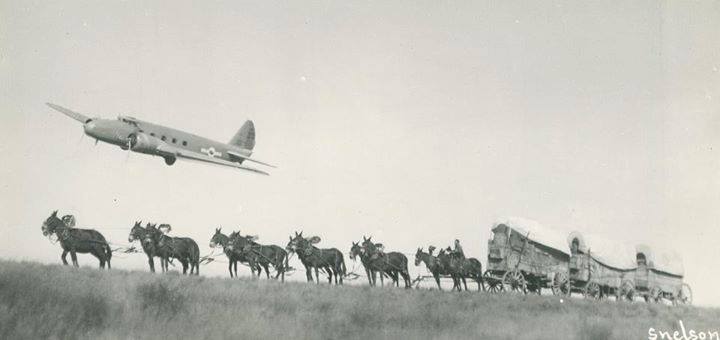
Photo of airplane flying over a wagon train

Digital technologies are driving significant changes in the digital edition publishing ecosystem. Our working group brings together a wide range of voices to learn more about and share how we can effectively collaborate and navigate, in practical ways, the shift toward a sustainable digital edition ecosystem.

What do you look forward to most from SCI, and what do you hope to accomplish through the Institute? What are your plans for next steps after the Institute this fall?

We are delighted at the opportunity and eager to engage in this wide-ranging exploration of the challenges and opportunities facing the digital edition. Intensive discussions will explore six core issues or challenges facing the digital edition: (1) users and uses of documentary editions; (2) ecosystem change; (3) editions, scholarship, and the historical profession; (4) work flows and common ways of working; (5) cost models and sustainability; and (6) best practices.

We also have a number of objectives for continued outreach, dissemination, and follow-on activities. First and foremost, the conversation will help the workgroup participants and other TriangleSCI 2016 participants to better understand the current state of the digital edition publishing ecosystem, and to identify immediate next steps and potential collaborations. The workgroup will outline a series of medium- and long-term goals, and map out a working agenda for subsequent convenings which the NHPRC will sponsor either individually or in cooperation with other entities and funders. We expect this conversation to result in at least one white paper, and to help inform the strategic direction of the NHPRC’s Publishing Historical Records in Documentary Editions program. Ideas emerging from this conversation will also be shared in participants’ own (or their institution’s) blogs, publications, talks, and other dissemination activities. Last but certainly not least, we expect that participation at TriangleSCI will shape our engagement with and across the full spectrum of professional groups that make up and will contribute to the emerging digital edition ecosystem.

Is there anything else you’d like to say about your project or participation in the Institute?

All of the participants in this working group feel the urgent need for what we believe will be an important, forward-looking conversation, and wish to extend our thanks to Triangle SCI for this opportunity. We are thrilled and honored that our working group was selected. It is only through collaborations like these–spanning across professional groups—that we will be able to build the kind of sustainable digital edition ecosystem we want and need.

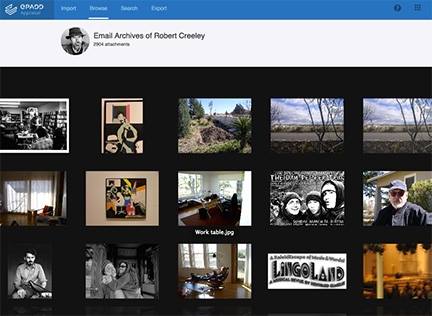
Screen shot from ePADD interface

With the growing proliferation of born-digital collections, there will be ever-greater need for projects that ensure these research collections are not only discoverable and visually accessible, but appropriately intelligible and usable. Pictured here is the NHPRC-funded tool, ePADD, developed at Stanford University Special Collections & University Archives. Tools like ePADD will open new possibilities for collaboration across a variety of professional groups in the creation of born-digital editions. (Visit the EPADD site at https://library.stanford.edu/projects/epadd.)

SCI 2016 project teams

Illustration by Kyle BeanAll of the invited SCI 2016 teams have confirmed that they are indeed able to attend this year’s institute on Incentives, Economics, and Values: Changing the Political Economy of Scholarly Publishing, so we’re now ready to announce who they are and the titles of their projects:

  • Building a Sustainable Digital Edition Ecosystem
    Tenisha Hart Armstrong, Hugh Cayless, Julia Flanders, Ondine Le Blanc, R. Darrell Meadows, Daniel Powell, Joshua Sternfeld, Rebecca Welzenbach
  • Does One Size Fit All?: Small Societies, Humanities Journals, and the Risk and Promise of Open Access Conversion
    Patrick Alexander, Eric Bain-Selbo, Cheryl Ball, Meredith Goldsmith, John McLeod, Kristen Ratan
  • HuMetrics: Building Humane Metrics for the Humanities
    Nicky Agate, Rebecca Kennison, Stacy Konkiel, Christopher Long, Jason Rhody, Simone Sacchi
  • Global Voices in Developing a Sustainable, Equitable Open Access Future
    Kamal Bawa, Ada Emmett, Town Peterson, Rosario Rogel-Salazar, David Shulenburger, Tetiana Yaroshenko
  • Social Integration for the Distributed Commons
    Janneke Adema, Sherri Barnes, Eileen Joy, Donna Lanclos, Stuart Lawson, Sam Moore

Congratulations to all of these teams, and we look forward to seeing you in Chapel Hill in October!

Over the next few weeks we’ll be adding blog posts where each team will describe their project and introduce the team members, so stay tuned for more information soon…

[ Image by Kyle Bean, copyright Kyle Bean. ]